
Nov 3, 2026
What Is L-Ergothioneine?
L-ergothioneine powder is a naturally occurring, sulfur-containing amino acid derivative — chemically categorized as a thiol/thione histidine betaine - that the human body cannot generate itself. It was first isolated from ergot fungus in 1909 and is now manufactured commercially using precise microbial fermentation. Its CAS number is 497-30-3, and its purity is ≥98% by HPLC. This white crystalline powder has been the subject of major scientific interest as a targeted intracellular antioxidant, with a specific transporter protein (OCTN1), and is unlike any other antioxidant available on the market.
What Makes L-Ergothioneine Scientifically Distinct?
A Dedicated Transporter No Other Antioxidant Has
Unlike vitamin C and glutathione, ergothioneine is transported via the OCTN1 transporter (encoded by SLC22A4). This transporter pulls it across cell membranes and concentrates it in tissues that are under a lot of stress, such as the liver, red blood cells, eyes, and skin. This specific delivery route means that the substance makes it to the part of the body where oxidative damage is most likely to happen.
Antioxidant Stability That Holds Under Pressure
EGT remains structurally stable at temperatures up to 100 °C and pH in the range of 3.0-9.0. But vitamin C, for example, breaks down rapidly in water-based solutions, and glutathione naturally oxidizes in the body. This thermal and pH stability is an important technical advantage for formulators manufacturing heated functional meals or water-based beauty serums.
The "Longevity Vitamin" Hypothesis
In 2022, scientists formally identified ergothioneine as a candidate “longevity vitamin”, citing demographic data that associated low plasma EGT levels with indicators of aging more quickly and disorders related to growing older. Research in publications like PNAS and Free Radical Biology and Medicine has shown EGT maintains mitochondrial health, reduces DNA oxidative damage, and boosts brain health. These findings have made it one of the most talked-about anti-aging raw ingredients.
Key Health Benefits Supported by Research
L-ergothioneine powder works in many organ systems, which is why buyers in nutraceuticals, skincare, and functional foods are all interested in this element.
Cellular and Mitochondrial Protection
EGT, like the most reactive oxygen species, accumulates in the mitochondria where it is produced during metabolic activity. Researchers have discovered that it maintains the integrity of the mitochondrial membrane and boosts the efficiency of ATP generation. These are two things that are directly related to healthy aging at the cellular level.
Cognitive Health and Neuroprotection
The tissue of the brain is rich in reactive stress but lacks much innate antioxidant defense. Ergothioneine is taken up from the circulation into the brain and accumulates in nerve tissue. A 2020 study published in the journal Biochemical and Biophysical Research Communications discovered a distinct correlation between greater levels of EGT in the blood and higher scores on cognition tests in elderly persons. This implies that EGT should be included in cognitive health supplements.
Skin Protection and Photoaging Defense
OCTN1 transporter is expressed in dermal fibroblasts and keratinocytes. That implies EGT may be administered to skin cells either via the skin itself or orally. It reduces oxidative damage from UV radiation, protects collagen-producing cells, and inhibits the signals for photoaging. This makes it a valuable element in beauty goods you consume and skin care you use on your skin.
How EGT Compares to Other Antioxidants in Procurement Decisions
When looking at antioxidants, purchasing teams often compare EGT to CoQ10, NAC (N-acetyl cysteine), and glutathione. The differences become important for business at this point.
Glutathione breaks down quickly in the digestive system if it is not liposomally encapsulated, which raises the cost of the product. NAC is good at replacing glutathione, but it smells like sulfur, which makes it harder to make flavorful products. Because it dissolves in fat, CoQ10 can't be used in devices that use water. EGT, on the other hand, L-ergothioneine powder dissolves in water, doesn't have any smell, stays stable at high temperatures, and can be taken by mouth or applied to the skin without any extra building of the delivery system.
The higher cost of this ingredient compared to other antioxidants is justified by the fact that it is bioavailable, works well with other ingredients, and has scientific support for anti-aging or brain health lines.
Bulk Procurement Guide: What to Evaluate Before You Buy
If you are sourcing EGT in bulk, you need to have an organized checklist. The improper supplier might put your brand at risk of purity fraud, regulatory non-compliance, or supply disruptions—all of which are pricey at launch.
Here are the top things every professional procurement team should check:
- Purity analysis: Request HPLC certificates of analysis (COA) for every batch. An acceptable guideline is ≥98%; pharmaceutical-grade providers exceed 99.9%. Make sure it is the L-isomer. The D form is physiologically inactive.
- Production method: Fermentation-based biosynthesis gives a stereochemically pure substance with consistent batch characteristics. Chemical synthesis methods are subject to contamination issues and have lower acceptance in clean-label markets.
- Third-party testing: Verify heavy metals (ICP-MS), pesticide residues, microbiological counts (USP <61>/<62>), and ethylene oxide by independent laboratories such as Eurofins, SGS, or similar.
- Regulatory paperwork: Ensure the product is FDA-registered for the US market. Make sure that the INCI listing is compliant for use in cosmetics. Kosher and Halal certifications may extend addressable markets without added formulation effort.
- Flexibility of MOQ: High-end companies frequently test recipes before scaling A vendor that allows for adjustable minimums decreases your financial risk when you are first developing a product.
Lead times: Standard stock ships within 1-2 business days. With a responsive supplier, custom specs should be possible within 5 to 10 days.
These guidelines safeguard your brand’s investments and legal position in highly competitive sectors.
Industry Applications: Where EGT Creates Product Value
EGT is one of the most helpful active ingredients for formulators nowadays due to its easy solubility in water and its bland taste profile. Its wide variety of uses in all categories is obvious.
It is included in lifespan capsules, cognitive support stacks, and anti-aging multivitamin blends in dietary supplements. Often paired with NAD+ precursors or resveratrol to protect against several forms of oxidative damage. Its neutral flavor and water solubility make it simple to include in functional beverages and protein bars without changing the taste or texture. It bridges the gap between beauty goods that you consume and skin science based on facts in nutricosmetics. Dermatological research backs this up, which is why some skin care manufacturers incorporate it in serums and eye lotions — it can protect against UV rays and decrease inflammation. Private label and OEM brands may request unique purity grades, particle sizes, and pre-mix formulae that are compatible with particular product forms.
Conclusion
L-ergothioneine powder is one of the very few antioxidants on the market that can be taken up by cells in a specific manner, is stable at high temperatures, and there is increasing clinical evidence to support this. For procurement specialists, it’s a no-brainer: Confirm purity using HPLC, ensure manufacturing is fermentation-based, and check third-party compliance papers before placing significant orders. When businesses use well-studied, high-purity actives, they are better able to charge greater costs and fulfill the stringent demands of informed consumers and regulatory bodies.
FAQ
1. Is L-ergothioneine safe for long-term use?
Current evidence supports a strong safety profile. EGT is a naturally occurring compound found in foods like mushrooms, black beans, and oat bran. Human studies to date have not reported adverse effects at supplemental doses. Regulatory agencies in the US and EU have reviewed its safety for use in food and cosmetic applications.
2. How does EGT compare to glutathione in efficacy?
Both support cellular antioxidant defense, but through different mechanisms. Glutathione is the body's primary endogenous antioxidant but degrades quickly when taken orally. EGT is absorbed intact via the OCTN1 transporter and has a tissue half-life of approximately 30 days — significantly longer than glutathione — providing sustained protection.
3. What should I check when selecting a bulk EGT supplier?
Confirm HPLC purity certificates, batch traceability, third-party lab results (heavy metals, microbials, pesticides), FDA registration, and relevant certifications such as ISO 9001, FSSC 22000, Kosher, and Halal. Also ask about MOQ flexibility and documentation turnaround time.
4. Can EGT be used in both topical and ingestible products?
Yes. Its water solubility and INCI listing make it compatible with aqueous cosmetic formulations. Its bioavailability profile also supports oral supplement applications, making it one of the few actives with genuine dual-channel utility.
Request a Sample from Clover Origins — Your Trusted L-Ergothioneine Powder Supplier
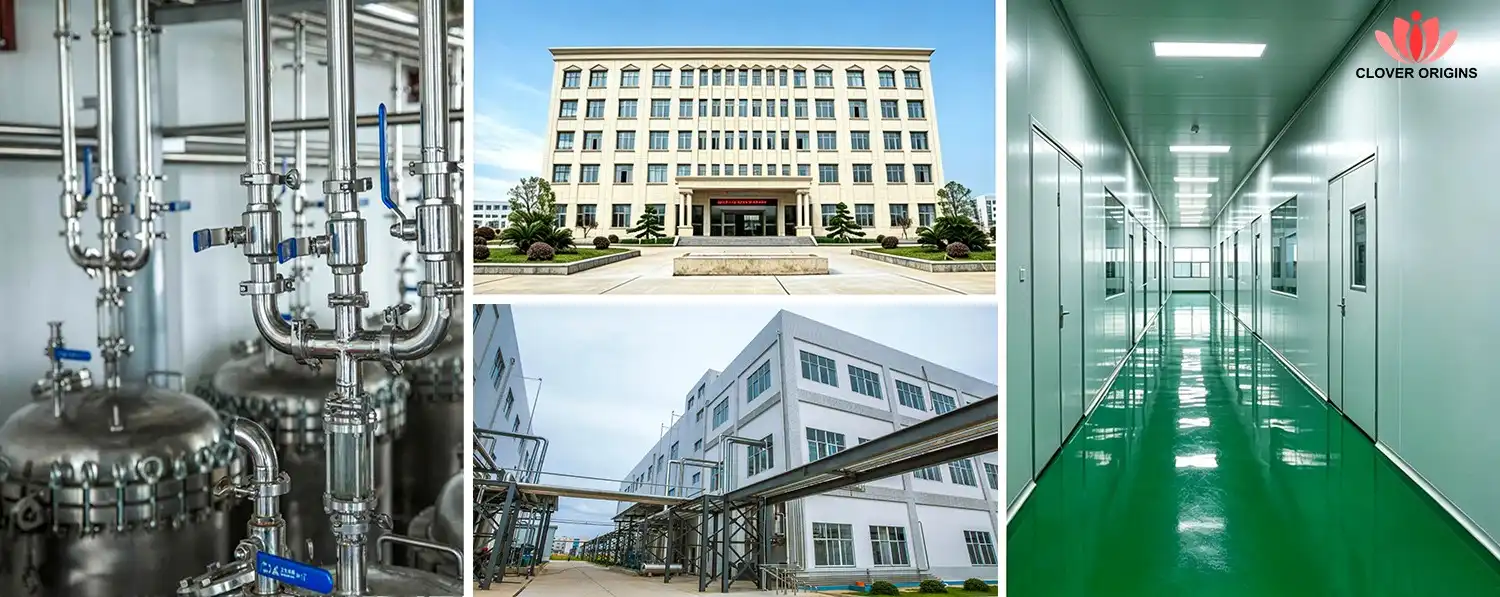
With ISO 9001, FSSC 22000, HACCP, Kosher, and Halal standards, Clover Origins sells fermentation-derived EGT that is 99.9% pure by HPLC. We can help with both pilot-stage development and full business scale because our MOQs are open, we ship stock within one to two days, L-ergothioneine powder, and we turn around documents within 12 hours. To get a free sample or scientific data package, email us at info@cloverorigins.com.
References
1. Beelman, R. B., Kalaras, M. D., Phillips, A. T., & Richie, J. P. (2020). Is ergothioneine a 'longevity vitamin' limited in the American diet? Journal of Nutritional Science.
2. Cheah, I. K., & Halliwell, B. (2012). Ergothioneine: antioxidant potential, physiological function and role in disease. Biochimica et Biophysica Acta.
3. Cheah, I. K., Tang, R. M. Y., Yew, T. S. K., Lim, K. H. C., & Halliwell, B. (2016). Administration of pure ergothioneine to healthy human subjects: Uptake, metabolism, and effects on biomarkers of oxidative damage and inflammation. Antioxidants & Redox Signaling.
4. Grundemann, D., Harlfinger, S., Golz, S., Geerts, A., Lazar, A., Berkels, R., … Schomig, E. (2005). Discovery of the ergothioneine transporter. Proceedings of the National Academy of Sciences.
5. Paul, B. D., & Snyder, S. H. (2010). The unusual amino acid L-ergothioneine is a physiologic cytoprotectant. Cell Death & Differentiation.
6. Smith, E., Ottosson, F., Hellstrand, S., Ericson, U., Orho-Melander, M., Fernandez, C., & Melander, O. (2020). Ergothioneine is associated with reduced mortality and decreased risk of cardiovascular disease. Heart.
Online Message