
Sep 30, 2026
What Is Dihydromyricetin in Vine Tea?
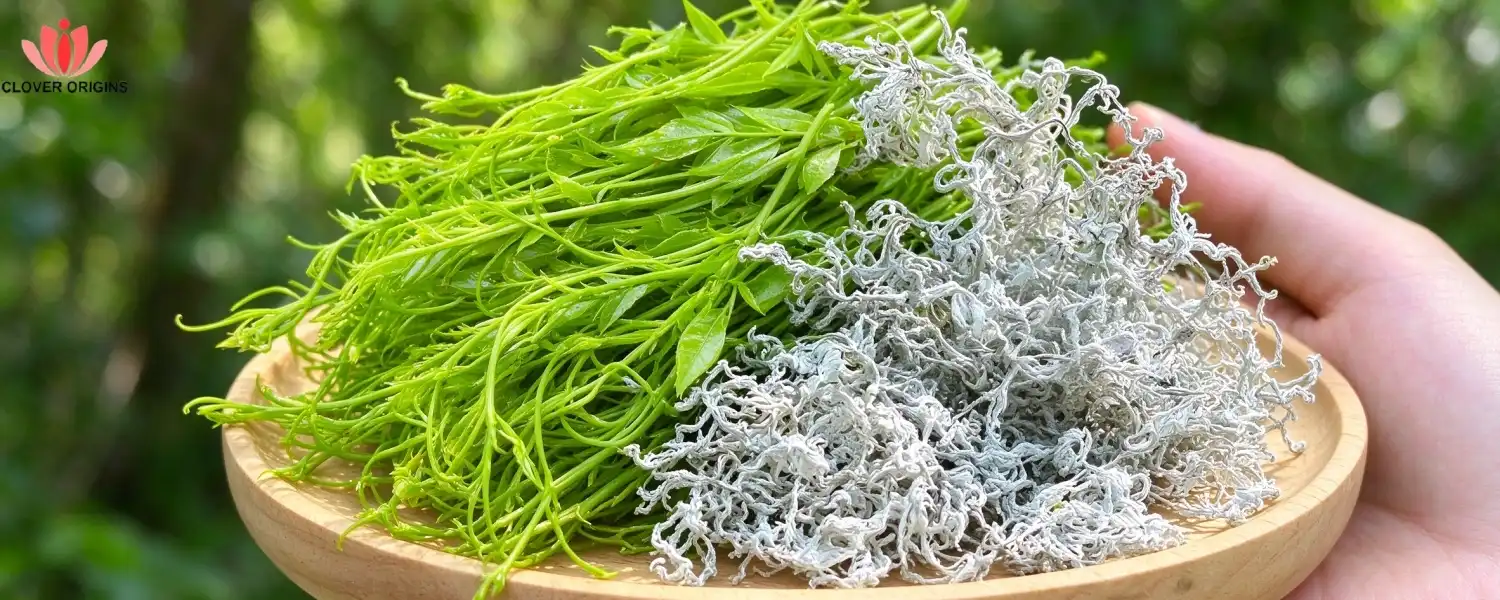
Vine tea dihydromyricetin (DHM) is a naturally occurring flavonoid extracted from Ampelopsis grossedentata, a climbing plant widely consumed in southern China for centuries. Standardized to 99% purity by HPLC, DHM is the dominant bioactive compound in vine tea, accounting for its well-documented antioxidant, hepatoprotective, and alcohol-metabolizing properties. Mechanistically, it activates ADH and ALDH enzymes to accelerate ethanol clearance, modulates the Nrf2 antioxidant pathway, and inhibits NF-κB-driven inflammation. For B2B formulators building functional beverages, liver-support supplements, or sports recovery products, DHM from vine tea represents one of the most research-backed botanical actives available today.
Understanding Dihydromyricetin in Vine Tea
Chemical Origin and Natural Abundance
DHM is made up of molecules with the formula C₁H₁O₈. Each molecule weighs 320.25 g. If you use ethanol and water to remove it from the dried leaves of Ampelopsis grossedentata, it stays pure and potent. An HPLC test with a C18 column and UV measurement at 290 nm found that at least 99% of high-quality market samples are made up of DHM. That gives producers in Hunan and Guangdong states a natural raw material edge because that's where the plant does best.
Key Physiological Mechanisms
DHM works through three biological pathways that have been looked into a great deal. First, it speeds up the breakdown of alcohol by making alcohol dehydrogenase (ADH) and aldehyde dehydrogenase (ALDH) work faster. It is bad for you because these two enzymes break down ethanol and acetaldehyde. Second, it activates the Nrf2 transcription factor, which is the body's own defense against free radicals. Third, it stops NF-κB signaling, which stops liver cells from making inflammatory chemicals. It may also help with sleep and anxiety because it links to GABA-A receptors. This is an area of health that hasn't been studied much yet.
Bioavailability, Safety, and Dosage
Native DHM powder doesn't mix well with water, which makes it harder to absorb when the liquid is cold. Scientists have found that the LD50 is more than 5 g/kg in rat models. This means that there is a big safety margin. Most products on the market that help with hangovers have 300 mg to 600 mg of DHM in each serving. People who want to make clear RTD drinks can use microencapsulation or cyclodextrin inclusion complexes. These are common technical methods that make the drinks taste better and separate more easily.
Comparing DHM with Other Natural Antioxidants and Supplements
DHM vs. Milk Thistle and NAC
N-acetylcysteine (NAC) and milk thistle (silymarin) are two of the best-known supplements for liver health. When NAC is added to glutathione stores, it mostly repairs the walls of liver cells. DHM is different because it goes after the exact pathway that breaks down alcohol. This means that it is only good for getting rid of hangovers and giving short-term liver support, not for general liver upkeep.
Natural vs. Synthetic DHM
When the natural DHM is taken out of vine tea dihydromyricetin, some flavonoids from the plant are still there to help the body absorb it. Chemical synthesis is used to make synthetic DHM, which doesn't have these other parts. It is harder to sell as "clean label" in the US and EU because of this. If you think something has been tampered with, carbon-14 isotope tests can prove that it came from nature. Suppliers are being asked to do this step of proof by buying teams that are getting smarter.
DHM vs. Green Tea Catechins and Kava
Green tea catechins (EGCG) are antioxidants that work like DHM but through different enzymes. They have been shown to change how much iron a person takes in. Kava works on GABA-A receptors in a way that is similar to DHM. However, it is thought to be bad for the liver, which limits where it can be used. DHM is an antioxidant and a GABAergic molecule, but it doesn't have any regulatory properties. This makes it a more useful material for making goods that have more than one use.
Procurement Guide: Sourcing High-Quality DHM
Product Formats and Certification Requirements
High-grade DHM can be found as fine crystalline powder (off-white to white), microencapsulated grains, or cyclodextrin inclusion complexes. These can all be used in drinks. When sellers want to sell their goods in the U.S., buying teams should make sure they have FDA facility registration, as well as ISO 9001, FSSC 22000, HACCP, Kosher, and Halal certificates. Each business batch should have a report from a third-party lab that has been checked by a well-known group, like Eurofins or SGS.
Here are the most important quality checks that buying teams should do on a DHM source before accepting it:
It was proven that the test was ≥98–99% DHM pure by an outside reference method that used HPLC instead of UV spectrophotometry, which gives wrong results by measuring total flavonoids.
EU and USP rules say that there should be less than 3.0 mg/kg of lead, less than 1 mg/kg of arsenic, less than 0.1 mg/kg of mercury, and less than 1 mg/kg of cadmium.
Residual solvents: ethanol less than 5,000 parts per million; no benzene or chloroform found. There should be less than 1,000 cfu/g of bacteria on the plate, and Salmonella, E. coli, and S. aureus should not be present at all.- It has a dry weight loss of ≦5.0% and an ash level of ≦1.0%.
- Assay purity: ≥98–99% DHM confirmed by HPLC external standard method, not UV spectrophotometry (which inflates results by measuring total flavonoids)
- Heavy metals: Lead <3.0 mg/kg, Arsenic <1.0 mg/kg, Mercury <0.1 mg/kg, Cadmium <1.0 mg/kg per USP/EU standards
- Residual solvents: Ethanol <5,000 ppm; no detectable benzene or chloroform
- Microbiology: Total Plate Count <1,000 cfu/g; zero tolerance for Salmonella, E. coli, and S. aureus
- Physical parameters: Loss on drying ≤5.0%; ash content ≤1.0%
All of these things meet Chinese standards as well as export-grade standards in the US and EU. Any reliable DHM provider should be able to give you Certificates of Analysis that are specific to your batch and cover all five dimensions.
Pricing, MOQ, and Negotiation
It costs more for 99% pure DHM than for 98% pure material, but the price gap gets smaller when you order more than 25 kg. People who are just starting to buy things should ask for samples (at least 50–100 g) before they place a trial order. Standard inventory has lead times of one to two days for items that are already in stock. In order to make customized particle sizes or encapsulated forms, it takes five to ten business days.
Verifying Supplier Authenticity
To get the full analysis and the raw HPLC chromatogram, you should ask for both. If it's a real vine tea dihydromyricetin extract, the DHM peak should be clear, and the holding time should be the same as the baseline DHM value. If the assay date and chromatogram fingerprint don't match, it means that the product may have been tampered with by adding fake filler material or generic myricetin.
Real-World Applications of DHM in Functional Products
Functional Beverage and RTD Formulation
Between 245 and 246°C is where DHM melts. This means that it stays solid at high temperatures during the hot-fill and processing processes. One of the main worries people have about RTD formulation is directly addressed here. It stays bright in cold water solutions when mixed with cyclodextrin. Several functional drink companies in the US and Japan have already made drinks with DHM in them that help people recover from hangovers. These businesses talk about the chemical in terms of the ADH/ALDH dual-enzyme process in their ads.
Sports Nutrition and Recovery Products
Oxidative stress and inflammation after exercise are a lot like the stress that booze puts on the liver. DHM is an antioxidant and an anti-inflammatory, so it makes sense to put it in recipes that help you heal from a workout.
Emerging Applications: Sleep and Mood
DHM is a unique ingredient that can be used in both high-growth categories by sports nutrition brands that are aimed at people ages 25 to 40, who are also the most likely to buy products to treat hangovers.
Conclusion
The chemical DHM, which is found in vine tea dihydromyricetin, is a well-known and useful plant substance that is backed up by more and more molecular research. It is known to be an important part of breaking down booze, protecting vitamins, keeping the liver healthy, and keeping GABAergic systems in check. A lot of different kinds of products are affected by these functions, from sports recovery and sleep health to functional drinks and hangover cures. People who work in procurement should ask for HPLC-verified purity, heavy metal, and pesticide testing by a third party when looking for DHM. They should also look for a supplier with the technical depth and production scale to support your formulation from pilot to commercial launch.
FAQ
1. Can DHM withstand hot-fill beverage processing?
DHM melts between 245°C and 246°C, which means it stays solid at standard temperatures for hot filling and pasteurization. Once the solution has been above 80°C for a long time, it is best to use an aseptic filler or add the extract while the solution is still cooling. This will help keep all of the bioactivity.
2. Why does DHM precipitate in cold water?
Raw solid DHM doesn't dissolve well in cold water because its molecules don't like water. People who work in engineering usually use HP-β-CD inclusion complexes to keep goods stable and clear on the shelf for clear liquid uses.
3. How do I confirm DHM purity is genuine?
It is important to ask for both the Certificate of Analysis and the raw HPLC data. A DHM peak must match the holding time of the reference standard in order for the test to be acceptable. Total flavonoid tests that use UV light often give falsely high purity numbers and can't be used instead of HPLC.
4. What is the standard dosage range for hangover-related formulations?
Early-stage studies and market research all point to 300–600 mg per dose taken before or right after drinking alcohol. People who make medicines should do pilot pharmacokinetic tests to make sure they know the right amount for the way they're giving the medicine.
5. Is natural vine tea DHM different from synthetic DHM?
The natural vine tea DHM has some small co-flavonoids from the plant that may help the body take them in. It's more important for U.S. brands that "natural origin" backs up their "clean label" and "plant-derived" claims. Carbon-14 tests can show that something is not natural if you think it is.
Partner with Clover Origins for Premium Vine Tea Dihydromyricetin
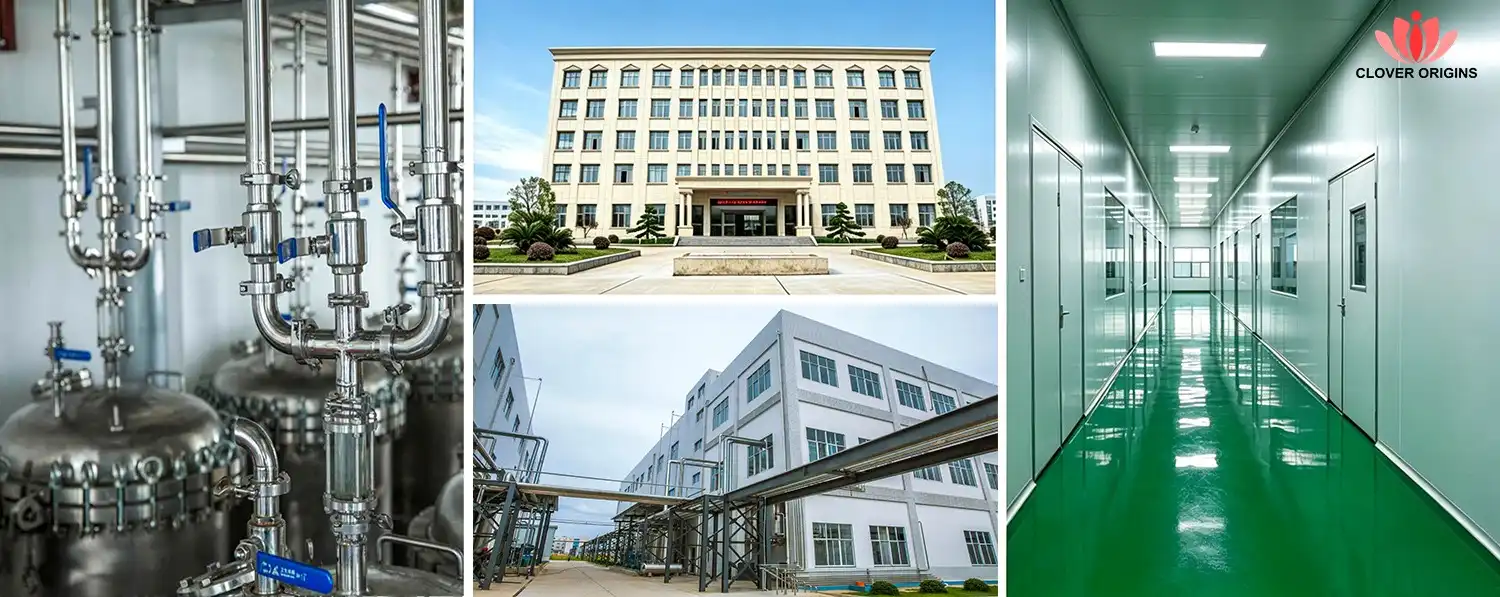
You can get vine tea dihydromyricetin from Clover Origins. Their facilities are FDA-registered and certified as ISO 9001, FSSC 22000, HACCP, Kosher, and Halal. They have been working with plant extracts for more than 25 years. We offer 99% DHM powder, full HPLC records, testing by SGS or Eurofins, and special cyclodextrin or microencapsulated forms. It takes 7 working days to send out samples. Send our team an email at info@cloverorigins.com to get a price.
References
1. Shen, Y., et al. "Dihydromyricetin as a novel anti-alcohol intoxication medication." Journal of Neuroscience, 2012.
2. Liu, T., et al. "Hepatoprotective effects of dihydromyricetin against alcohol-induced liver injury in mice." Food & Function, 2014.
3. Hou, X., et al. "Dihydromyricetin ameliorates oxidative stress and inflammation via Nrf2 and NF-κB pathways." Phytomedicine, 2015.
4. Zhang, Y., et al. "Ampelopsis grossedentata: A review of its phytochemistry, pharmacology, and application." Journal of Ethnopharmacology, 2021.
5. Wang, M., et al. "Cyclodextrin inclusion complex of dihydromyricetin: Preparation, characterization, and solubility improvement." Carbohydrate Polymers, 2018.
6. Chen, S., et al. "Dihydromyricetin improves exercise performance and attenuates exercise-induced oxidative stress." Food Chemistry, 2019.
Online Message