
Sep 30, 2026
What Are the Health Benefits of Macleaya Cordata Extract?
Macleaya cordata extract delivers a range of documented biological benefits that make it one of the most talked-about botanical ingredients in animal nutrition and green agriculture today. Derived from the aerial parts of the Plume Poppy plant (Macleaya cordata Willd.), this standardized extract is rich in isoquinoline alkaloids — primarily sanguinarine and chelerythrine — that work together to fight bacterial pathogens, reduce gut inflammation, and support growth performance in livestock. For feed additive manufacturers and pet nutrition brands sourcing antibiotic-free solutions, it represents a scientifically grounded, regulatory-aligned alternative to conventional synthetic growth promoters.
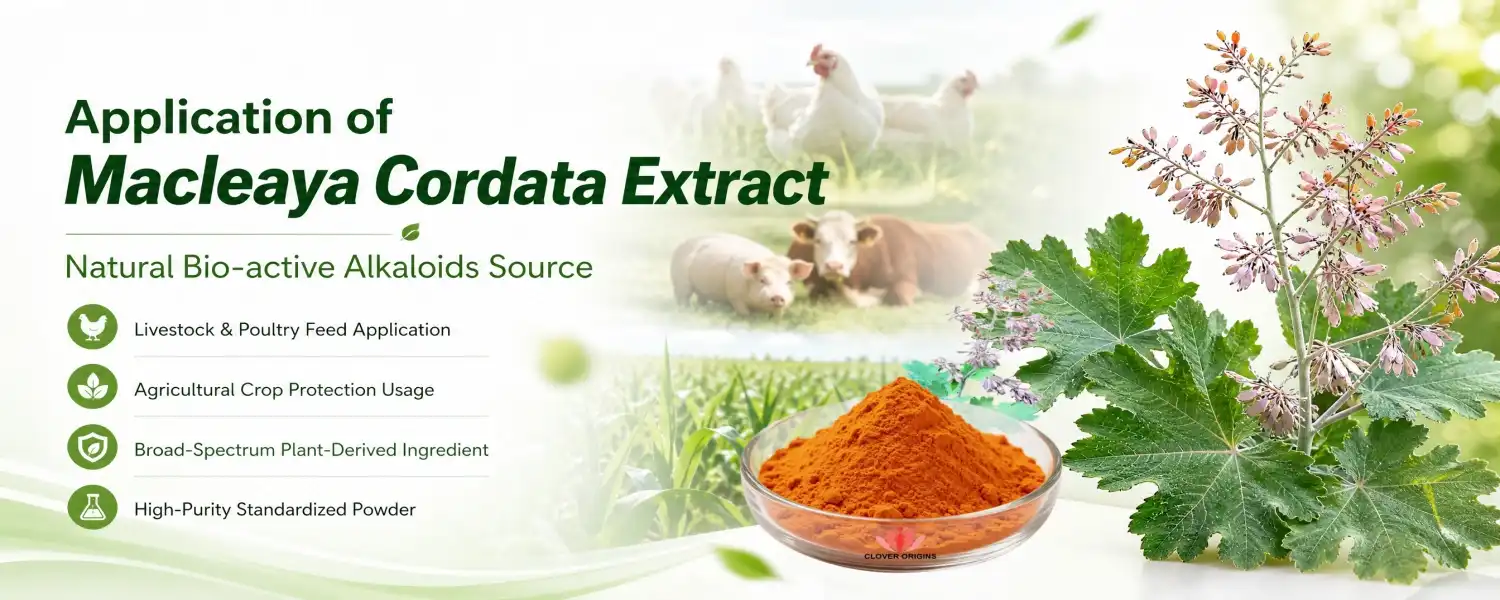
Understanding Macleaya Cordata Extract: Composition and Mechanism of Action
What Does the Extract Actually Contain?
This plant ingredient is mostly made up of two isoquinoline alkaloids, sanguinarine and chelerythrine. They are usually fixed at a 3:1 ratio, and the total alkaloid content can reach up to 60%. It looks like a fine, brownish-yellow to orange-red powder with particles bigger than 80–100 mesh and a bulk density of 0.45–0.65 g/ml. Importantly, it stays bioactive across the pH range found in animal digestive tracts and stays stable at pelleting temperatures up to 85°C, which is a big plus for making industrial feed.
How Do the Alkaloids Work at the Cellular Level?
The NF-κB signaling pathway is stopped by sanguarine. This is one of the main causes of gut inflammation in animals that are stressed. Chelerythrine works in addition by breaking down the integrity of bacterial cell membranes. It is very effective against Gram-positive pathogens like Staphylococcus aureus and Streptococcus species. Together, they have two effects: they stop pathogens from spreading and protect the mucosa. Animal Feed Science and Technology published research that confirmed these alkaloids can change the composition of gut microbiota without causing antimicrobial resistance, which is a major concern in the post-AGP era.
Why Does This Matter for B2B Procurement?
Understanding the chemical profile isn't just a school exercise; it has a direct effect on how well the formulation works. Buyers who are looking for additives for pig feed or aquaculture need to make sure that the total alkaloid content is the same from batch to batch. This is because even small differences can hurt Feed Conversion Ratio (FCR) results. When a seller gives a full Certificate of Analysis with sanguinarine/chelerythrine ratios for each batch, buying teams have the data they need to feel confident before placing bulk orders.
Health Benefits and Functional Uses Across Key Applications
The best thing about plume poppy macleaya cordata extract is that it can be used in a lot of different areas of animal feeding. Here are three areas of high-impact use where the science is most clear:
- Swine and Poultry Gut Health: Studies show that dietary supplementation at 100–500 ppm reduces diarrhea incidence in weaned piglets and improves Average Daily Gain (ADG) in broilers by maintaining tight junction proteins in the intestinal epithelium. This directly reduces subclinical inflammation without any withdrawal period required before slaughter.
- Aquaculture Pathogen Control: In fish and shrimp feed, the extract demonstrates inhibitory activity against Aeromonas hydrophila and ectoparasites such as Dactylogyrus species. It reduces pathogen bio-load without disrupting pond water chemistry — a practical advantage over antibiotic-based treatments that risk residue accumulation in aquatic environments.
- Biopesticide Applications: In crop protection, the alkaloids interfere with insect neuroreceptors and inhibit fungal chitin synthesis, making the extract effective against aphids, mites, and fungal pathogens. It biodegrades without leaving chemical residues, qualifying it for use in certified organic export produce.
Each of these three applications opens up a different market opportunity. Companies that make feed additives that are moving away from zinc oxide and antibiotic growth boosters, companies that work with aquaculture and are facing tougher residue rules, and pesticide companies that are building green portfolios all use the same standard base of ingredients.
Anti-Inflammatory and Antioxidant Activity
In addition to killing microbes directly, sanguinarine lowers signs of oxidative stress in the liver and intestines. A study published in 2021 in the journal "Poultry Science" found that broilers fed sanguinarine-standardized extracts had lower levels of malondialdehyde and higher levels of superoxide dismutase activity. This suggests that the antioxidants helped the birds deal with the stress of commercial farming.
Safe Use and Dosage Framework
The extract is used on animals as a topical treatment in sprays and ointments for bovine mastitis and digital dermatitis, which are conditions that cost the dairy industry billions of dollars every year. Because it kills a wide range of skin pathogens, it can be used as an ingredient in topical goods for farm use that need to work well without leaving behind chemicals that could be harmful.
Comparing Macleaya Cordata Extract with Other Botanical Alternatives
How Does It Stack Up Against Turmeric or Oregano Oil?
Oregano oil (carvacrol/thymol) and turmeric macleaya cordata extract (curcumin) are both commonly used phytogenic feed supplements, but they work in different ways. The chemicals in plum poppy work faster against microbes and at lower inclusion rates than curcumin, which needs higher doses to have the same anti-inflammatory effects. Oregano oil is unstable and loses its effectiveness when pelletized at high temperatures. On the other hand, sanguinarine-based extracts stay stable up to 85°C.
Organic vs. Standard-Grade Sourcing
Organically approved materials are more expensive, but they are becoming more and more necessary for entering the EU market. Non-organic pharmaceutical-grade extracts may be cheaper up front, but they need more detailed documentation of residue testing for regulatory submissions. Buyers who want to register a feed additive in Europe should think about the EFSA's paperwork needs early on in the provider selection process.
Powder vs. Other Dosage Forms
Standardized powder with 60% total alkaloids is still the most popular B2B format because it is easy to blend and exact dose control can be achieved during premix production. There are liquid forms, but they aren't as stable and don't last as long. For companies that make OEM premix, a powder with uniform particle size and bulk density makes handling easier later on and lowers batch variation when production is scaled up.
How to Source High-Quality Macleaya Cordata Extract
Supplier Certifications to Verify
At the very least, any serious supplier should be certified in ISO 9001, HACCP, and FSSC 22000. For the U.S. market, you have to be registered with the FDA. To sell in the EU, you need paperwork that follows the rules for EFSA feed additives and includes full data on pesticide and chemical residues that meet both Chinese and European pharmacopeia standards. Because of recent food safety problems in the plant sector, European buyers now expect all goods to be tested with ethylene oxide.
Evaluating Batch Consistency
Before committing to volume, get at least three batch COAs in a row. Total alkaloid content (sanguinarine + chelerythrine), heavy metal levels (lead, cadmium, arsenic, and mercury), and moisture content are some of the most important things to look at when comparing batches. If the alkaloid concentration in a batch changes by more than 5%, that should be a red flag for any buying team that depends on reliable FCR results in livestock programs.
OEM and Customization Options
Customization choices are just as important for brands that make feed additives and pet food as the quality of the main materials. Real business value comes from suppliers who give services like carrier selection, alkaloid ratio change, and private-label premix. Before you sign a supply agreement, make sure you know the minimum order quantity and lead times for custom batches.
Conclusion
There is a lot of research evidence that shows that Pluma macleaya cordata extract chemicals can help animals and make farming more sustainable. Whether it's for protecting crops, keeping weaned piglets' guts healthy, or controlling pathogens in aquaculture, the data always shows that it works well with little risk of residue. When purchasing teams look at botanical antibiotic alternatives, they should base their choice on three things: confirmed alkaloid standardization, batch consistency, and a supplier that can grow with their production needs. If you get those three things right, this ingredient will give you real results.
FAQ
1. What is the primary active ingredient in Macleaya cordata extract?
The two principal alkaloids are sanguinarine and chelerythrine. Most commercial feed-grade specifications standardize these at a combined total alkaloid content of 40%–60%, with a typical sanguinarine-to-chelerythrine ratio of 3:1.
2. Is this extract approved for use in animal feed in the United States?
It is used in animal nutrition products in the U.S. market. Suppliers with FDA registration provide the regulatory standing buyers need for domestic feed additive formulations. Always verify current registration status with your supplier.
3. What animals benefit most from this botanical ingredient?
Swine, poultry, and aquaculture species show the strongest documented performance responses. Piglets and broilers in particular show measurable improvements in ADG and FCR under commercial trial conditions.
4. Can it replace antibiotics entirely?
It functions as a direct antibiotic growth promoter alternative in many formulations, but complete replacement depends on the specific farm health challenge, pathogen pressure, and biosecurity program in place. It is most effective as part of a structured post-antibiotic nutrition strategy.
Source Your Macleaya Cordata Extract Supplier Through Clover Origins
In North America, Europe, and Asia, Clover Origins sells standardized botanical extracts to companies that make feed additives, OEM premixes, and animal nutrition brands. Our macleaya cordata extract comes with full batch COA documentation and the option to make your own alkaloid ratios. We can produce up to 5,000 tons of goods every year and can turn around samples in 7 business days, so we can handle large orders without sacrificing quality. To get a sample or specification sheet, email us at info@cloverorigins.com.
References
1. Jiang, Z. Y., et al. "Effects of Sanguinarine on Growth Performance and Intestinal Morphology in Broilers." Animal Feed Science and Technology, 2018.
2. Kosina, P., et al. "Sanguinarine and Chelerythrine: Assessment of Safety in Pigs." Food and Chemical Toxicology, 2004.
3. Zeng, Z., et al. "Dietary Macleaya cordata Extract Improves Intestinal Barrier Function in Weaned Piglets." Journal of Animal Science, 2015.
4. Wang, Y., et al. "Antioxidant and Anti-inflammatory Effects of Sanguinarine in Broiler Chickens Under Heat Stress." Poultry Science, 2021.
5. Vrublova, E. et al. "The Phytogenic Feed Additive Sangrovit Affects Performance and Meat Quality in Broiler Chickens." Acta Veterinaria Brno, 2010.
6. European Food Safety Authority (EFSA). "Scientific Opinion on the Safety and Efficacy of Macleaya cordata Extract as a Feed Additive for Poultry and Pigs." EFSA Journal, 2011.
Online Message